See your gradebefore they see your card.
Before you ship a card to PSA, scan it with AuraGrade. 50+ deterministic scoring rules across 4 axes, evidence image for every defect — and the same answer every time you ask.

Right now, deciding to grade a card is just guessing what PSA will give you back.
Aura Matrix · 100-point grading, four axes.
A fixed-deduction model, with a single-axis floor — the same way the strictest physical graders actually score.
Three steps. Ninety seconds.
Capture
Guided alignment frame. Auto-rejects blur, glare, and tilt before they pollute the model.
Analyze
Aura Matrix runs a four-axis defect scan, with a confidence score on every prediction.
Report
Full breakdown — annotated defect crops, deduction ledger, and a grader's-voice writeup.
90 seconds. Your first scan is on us — no credit card.
Snap or drop a card. See exactly what AuraGrade does to it — sign up to unlock your real grade.
We tell you when we don't know.
Every prediction carries a Confidence Score from 50% to 99%. Phone-shot in poor light? You'll see it. Pro-scanner input? You'll see that too. No false promises. Under the hood: solvePnP perspective rectification normalizes any camera angle before measurement, cv2.inpaint TELEA glare suppression cleans foil reflectance before defect detection, HSV holo detection routes foil regions to adjusted surface thresholds so sheen isn't misread as scratches. Defect detection runs on Anthropic Claude Opus 4.8 — currently the strongest vision model available, not a cheaper substitute. Centering isn't AI-guessed at all: pixel-by-pixel measurement on the rectified LAB-chroma image, same answer every time. Both sides graded, weighted 0.65 front + 0.35 back per BGS/TAG industry research — most pre-graders skip the back entirely.
Real cards. Real PSA grades.
Real AuraGrade predictions.
Real cards. Real PSA certificates. Tap any one to read the full deduction ledger and inspection report — exactly what you'll get back on your own scan.








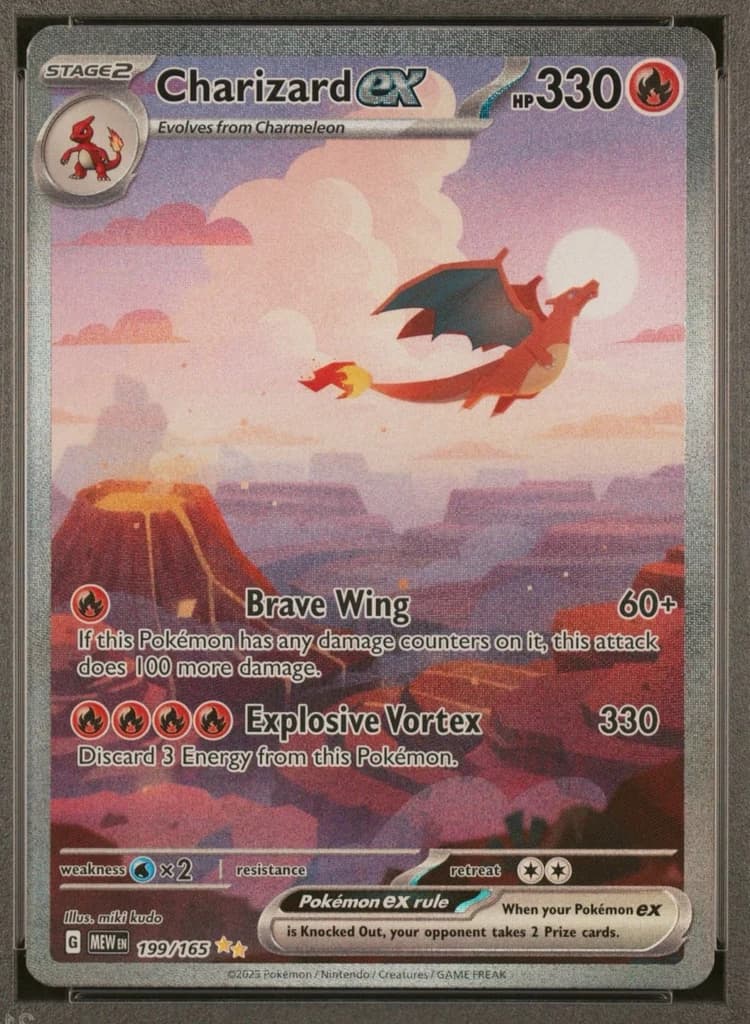



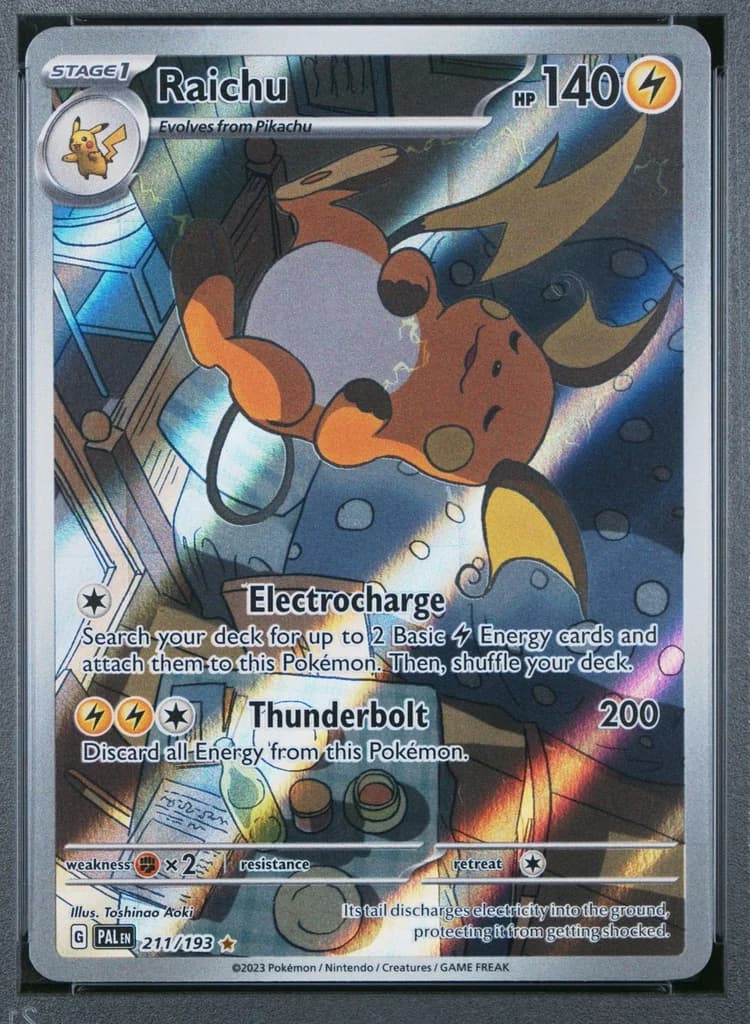

























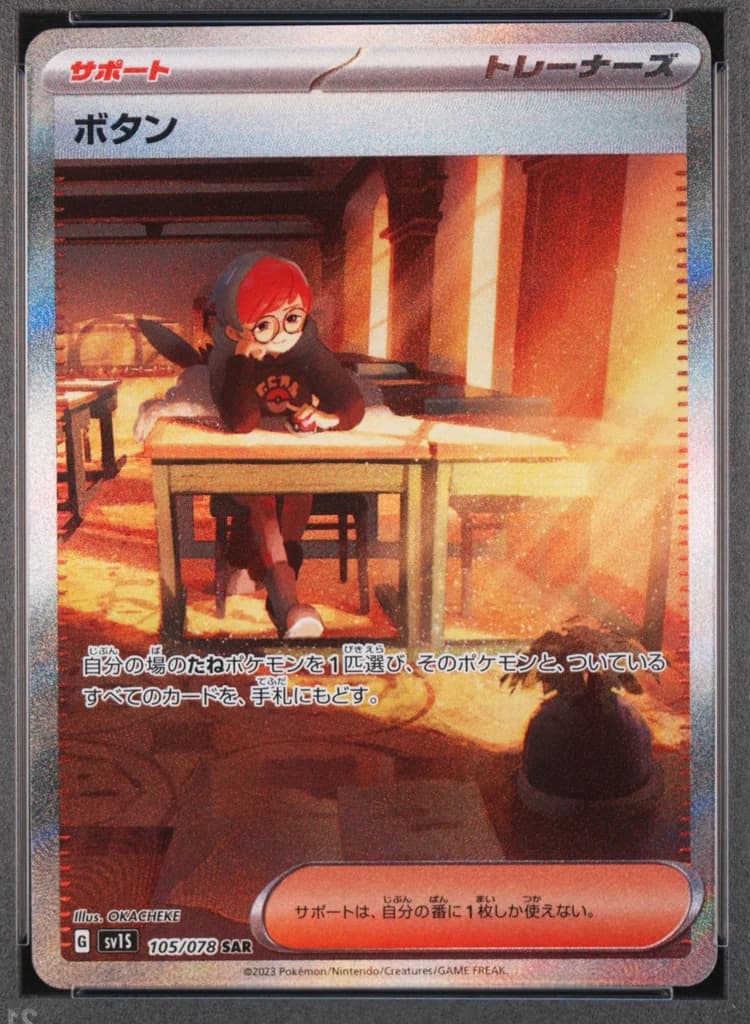








Why this score is defensible.
Every grade cites a specific scoring rule, ships a photo of every defect, and runs the same fixed math on every card.
Every deduction in your report cites a specific rule code (CTR-5, SUR-18, and so on) and ships a bbox evidence image. Every composite shows its math live: 4 axes → average → min axis → floor → composite → tier. 50+ rules running through one fixed scoring engine — see how it works before you scan.
Upload the same photo twice, get the exact same score. The AI finds the defects; the formula that turns those defects into a grade is fixed and identical for every card. The score is math, not mood.
Every flaw we cite ships with a cropped, framed evidence image — you can see exactly what the AI saw, where it saw it, and which rule it triggered. Trace every −1 and −10 back to the rule that produced it.
- ✕We don't replace PSA. We pre-grade so you don't waste $30+ submission fees finding out PSA agrees with you.
- ✕We don't promise a Gem Mint 10 from a phone shot — physics caps phone-only confidence below GM, and we say so on every report.
- ✕We don't sell your photos. Private Supabase bucket, scoped to your user_id; on account closure your profile, reports, and images are hard-deleted immediately (we keep only a one-way email hash and OAuth sub ID for 365 days to prevent free-credit abuse — see Privacy §3).
Things you're probably wondering.
No. AuraGrade is fully independent — we don't sell graded cards, run an auction house, or own any secondary-market inventory. Our only revenue is the $0.99 you pay for a scan, which means we have zero financial incentive to inflate or deflate your grade.